Beware the Beautiful Plants That Don't Exist
Purple hostas, rainbow roses and blue strawberries look irresistible online. There's just one problem: many don't exist. AI-generated images are helping sellers market seeds for plants that nature never created.
By Ruby Carlino
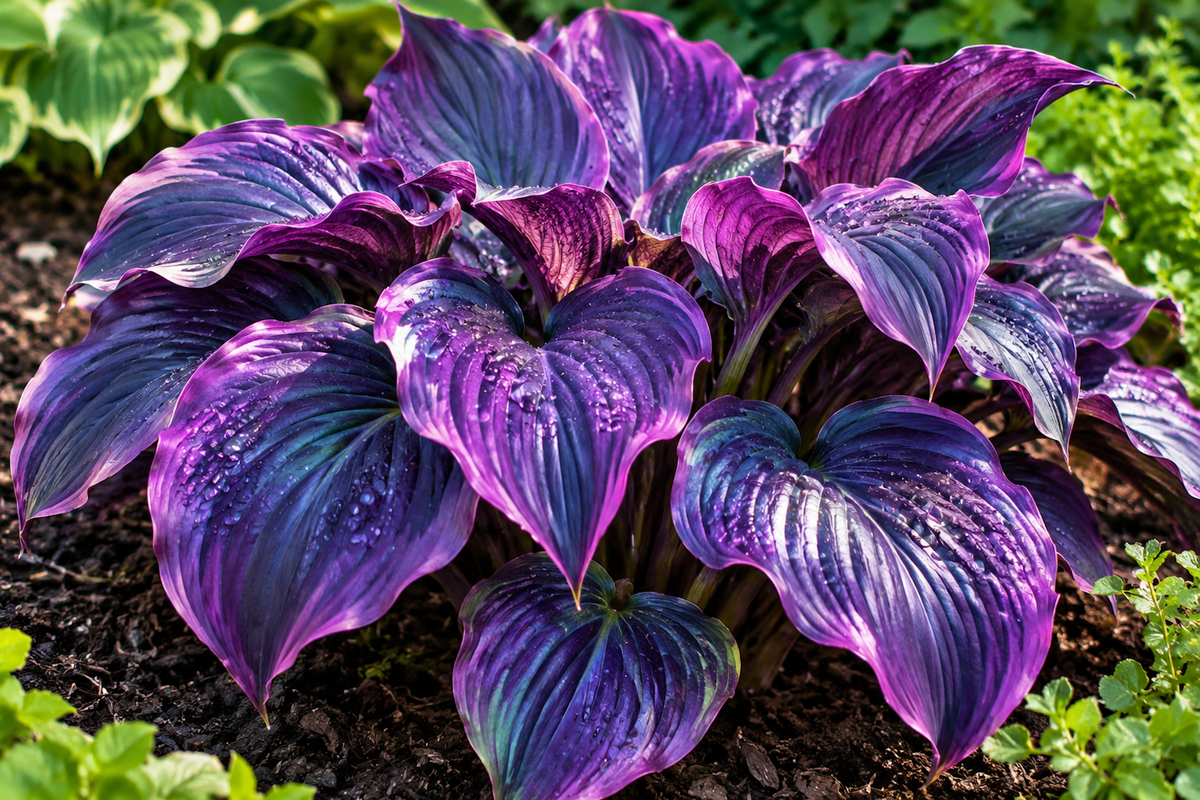
A friend told me she was thinking of ordering seeds for a spectacular purple hosta she had found on Amazon. There was only one problem: the hosta didn't exist. The photograph looked convincing. The leaves were lush with an almost jewel-like purple color. But hostas don't grow in that color. What my friend had encountered is becoming an increasingly common problem for gardeners: artificial intelligence can now create an image of virtually any plant we can imagine—and someone can use that image to sell seeds for it.
Look up “hosta seeds” online and you will see purple, electric-blue, pink and red hostas. These are among the most common. There are also listings for multicolored or “rainbow” hostas, red-white-and-blue “American flag” hostas, and a fluorescent blue hosta. There is even a Peacock Flame Hosta with peacock-eye markings on its leaves that comes in different color varieties. All these do not exist in reality. The listings are not limited to Amazon; they are similarly pervasive on Etsy, and eBay, and other online retailers.
For an example of how AI-generated plant images can mislead online shoppers, watch this YouTube video
Alongside fake hostas, there are rainbow roses and other flowers in physically implausible combinations. There are seeds for Teddy bear sunflowers colored purple, pink, lavender, blue, or hot pink. The Teddy Bear sunflower (Helianthus annuus ‘Teddy Bear’) is real but only as a golden-yellow cultivar; it is not available in other colors. Among other AI manipulations are electric blue strawberries, a neon blue Venus flytraps, a black colored bleeding heart, and if that’s not enough, there’s a “cat face orchid seeds” with flowers showing the face of a cat. There is also a purported plant with leaves in the shape of a butterfly complete with eyes and a pair of antennae. Perhaps my favorites are the elephant ear bulb and a lotus plant shown planted next to a house. They are so healthy looking, the mature plants are portrayed as large as the garage door. According to 404 Media, one bogus rose seed seller racked up 37,271 sales on eBay before being banned. A separate fake purple 'teddy bear sunflower' listing sold 1,301 times before being flagged on the same platform.
In response to a gardener's inquiry about unusually colored hostas, the University of Maryland Extension's Home and Garden Information Center explained: “Hostas are also rarely grown from seed. Instead, they are sold as divisions, since seedlings would probably not retain the unique traits of the parent plant… They do not have leaf colors of orange, pink, red, or purple.”
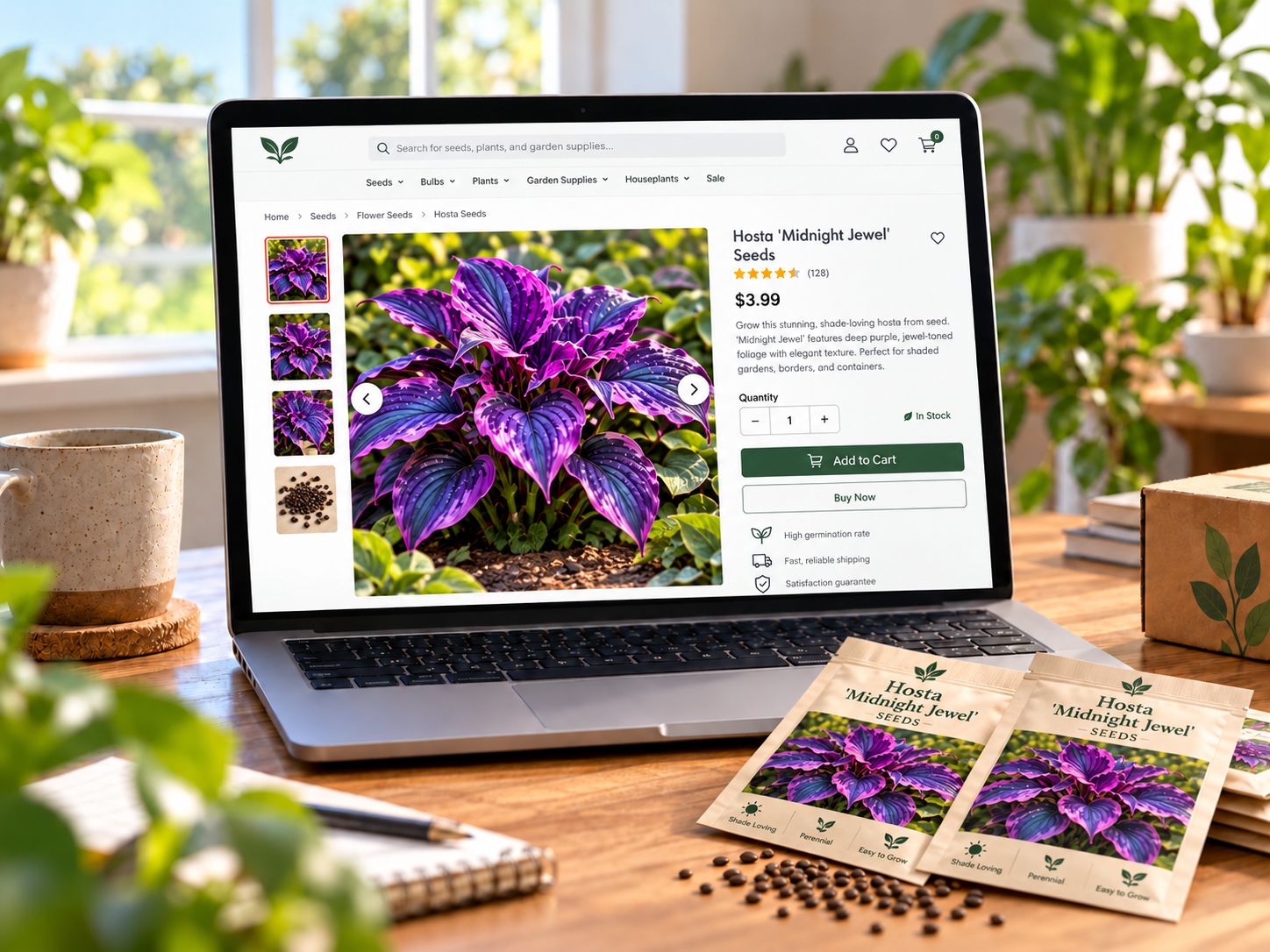
Over at the Amazon marketplace, the buyers were not happy. One said, “I bought these seeds expecting to grow some type of colorful hostas … according to AI identification I’m growing Chinese basil.” Another said, “Sad to find out, what I bought does not exist in nature.” One was more pragmatic, “By the time they grow large enough for Google to identify, the refund window is closed. All I can say, I got scammed.”
There are a few things to look for to avoid these fake seed scams. First, listings that only include labels like “rare purple hosta” without a real cultivar name should be a red flag. If you see a listing that includes impossible colors like neon purple hostas, blue strawberries, or rainbow roses, click elsewhere. Other red flags include: gross exaggeration of size and form (a purple cabbage as big as your trash binds); too-perfect appearance like flawless symmetry and identical petals; strange plant anatomy like mismatched leaves or flowers, or photos that look fantastical rather than horticultural (animal-shaped flowers or jewel-like foliage). And if only marketplace sellers carry it, and no reputable nurseries and plant societies have it on their catalogs or website, be very wary.
It used to be that scammers needed Photoshop skills to put up something reasonably believable online before they could sell it. Not anymore. These days, AI can create a spectacular purple sunflower or unique hostas in a matter of minutes for free. Scammers are listing $3-$6 packets of ordinary seeds and can sell thousands before they are removed from the marketplace, a digital smash and grab. With AI, the cost of the putting up a bait has gone down just as the bait’s quality has gone up. So if they look too good to be true, they probably are.
◆