The Person Who Answers Your 911 Call
In this occasional series, The Sequim Post introduces the people whose everyday work keeps the North Olympic Peninsula running.
A Day in the Life of a PenCom Emergency Dispatcher
By R.E. Carlino | The Sequim Post
November 16, 2026 12:15 AM
Peninsula Communications, better known as PenCom, operates Clallam County's 911 emergency communications center from the Port Angeles Police Department. Although operated by the City of Port Angeles, PenCom serves communities throughout Clallam County, coordinating police, fire and emergency medical responses for 17 agencies around the clock.
Behind those calls are communications officers who must quickly assess emergencies, coordinate responders and help people through some of the most difficult moments of their lives.
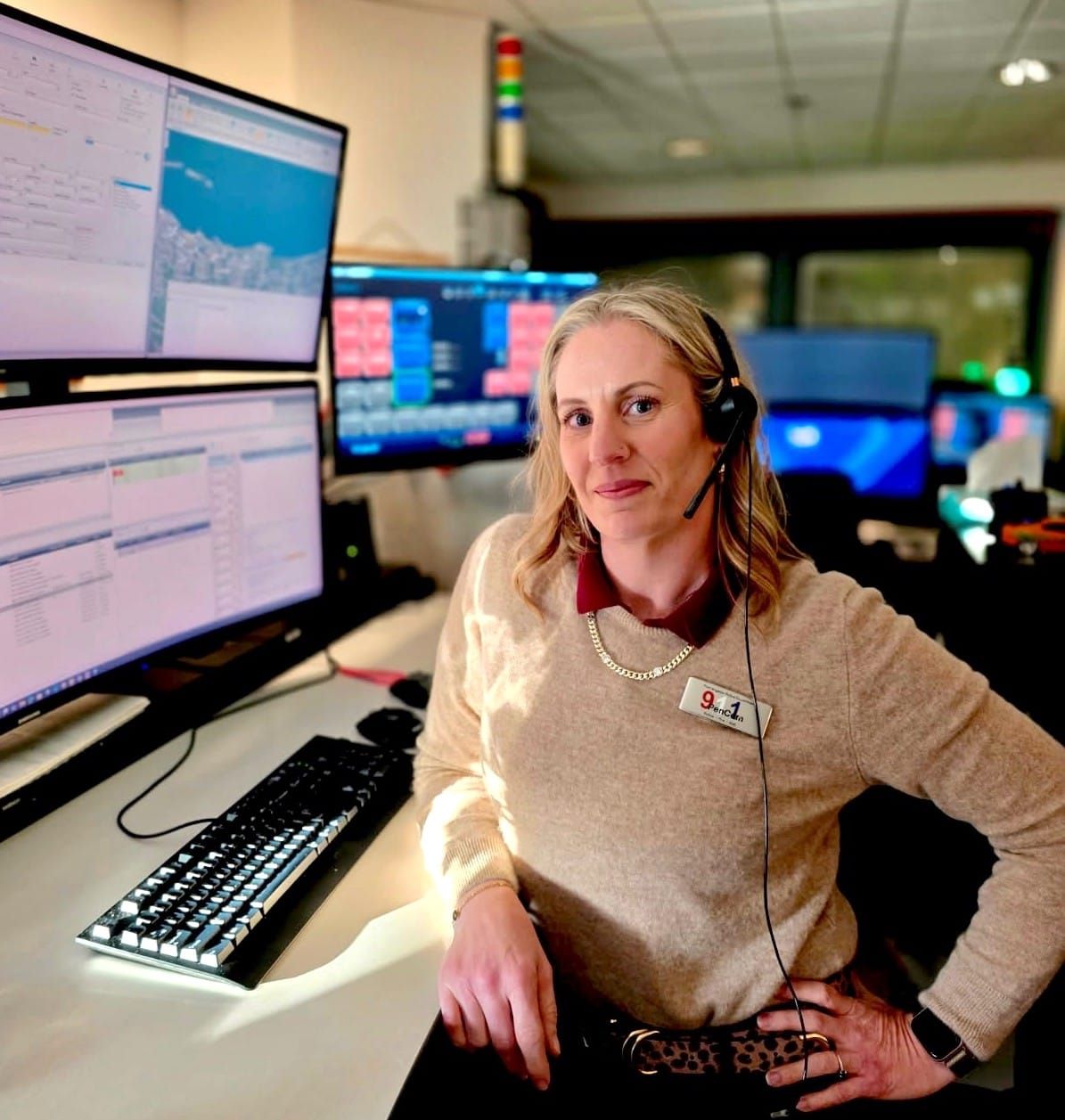
One of those voices belongs to Tiffany Lozano, who joined PenCom in January 2023 after a career in the mortgage industry. In an email interview with The Sequim Post, she shared what happens behind the scenes when someone calls 911, the challenges of the job and the experiences that stay with her.
An Unexpected Career Change
For nearly three decades, Lozano's working life had little to do with emergency services. She spent 10 years as a licensed cosmetologist and another 18 years in the mortgage industry before deciding, as she approached her 40th birthday, that it was time for something different.
A friend who worked at PenCom kept telling her how much he loved his job.
“Something must be wrong with him if he loves a job like that that much,” she recalled thinking.
But curiosity eventually won out. She looked at the job posting and decided to apply. The extensive hiring process included several assessments and pre-employment tests. She remembers taking the first test on her iPad while riding as a passenger on a road trip.
“That was actually kind of fun,” she recalled.
She received a job offer in December 2022 and began working at PenCom on January 3, 2023.
Today, she's also raising three teenagers and planning a spring wedding. Her fiancé is a first responder, adding another demanding schedule to an already busy household.
Inside a 12-Hour Shift
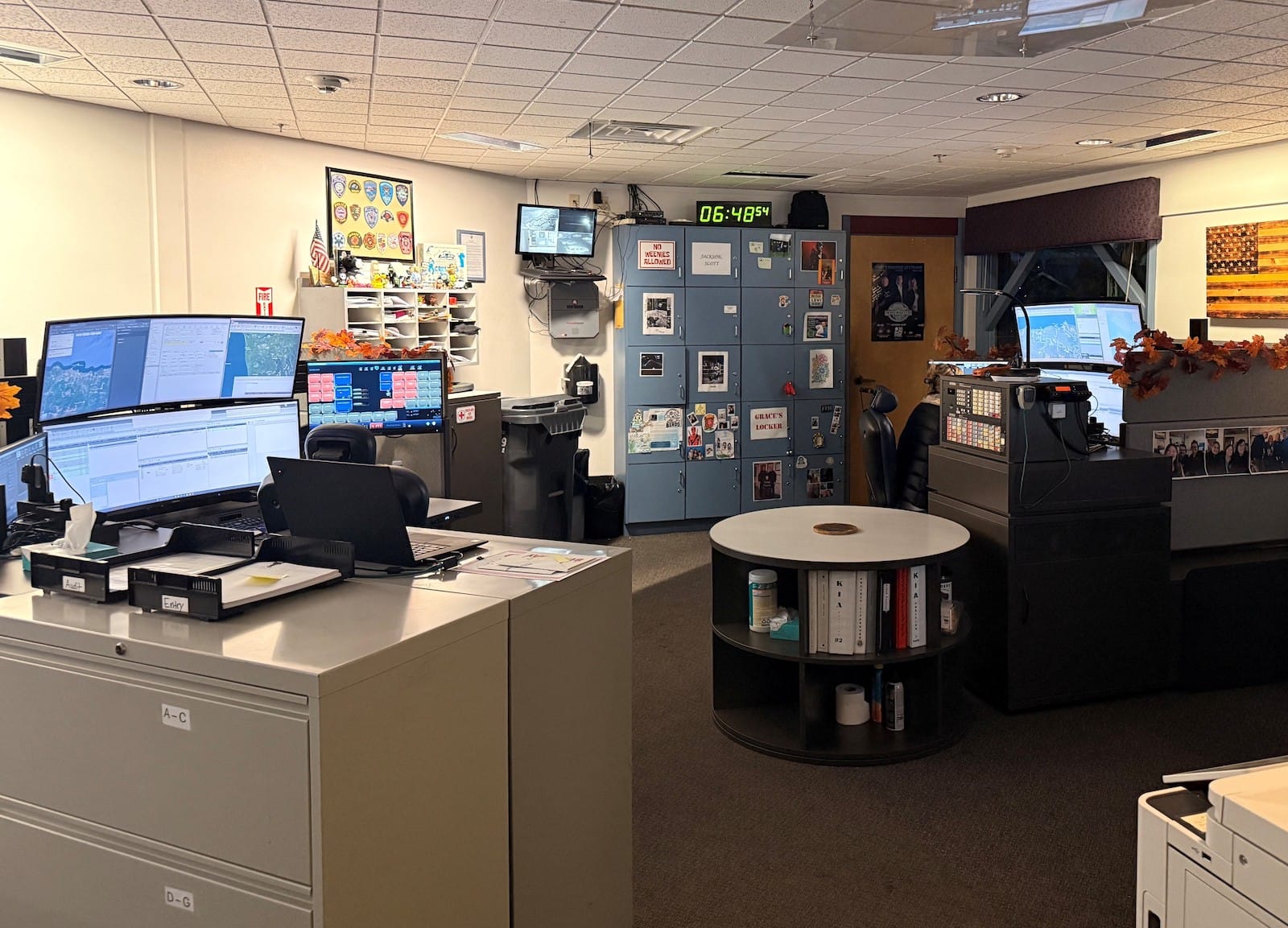
At PenCom, one 12-hour shift flows directly into the next. Dispatchers arriving for duty receive a briefing from the outgoing team about emergencies in progress, responding units and other developments. They sign into their consoles one at a time so incoming calls and radio communications continue without interruption.
"At PenCom, we handle all 911 calls, the non-emergency lines for each agency, and all radio traffic for the entire county, including law enforcement and fire/EMS," Lozano explained.
The center's responsibilities are divided geographically among three consoles: Central, covering Port Angeles and surrounding areas; West, covering Forks and surrounding areas, along with fire and EMS for most of the county outside Sequim; and East, covering Sequim and surrounding areas, including Fire District 3. A supervisor typically staffs a fourth console and covers breaks.
During a standard 12-hour shift, PenCom creates between 150 and 250 calls for service. Some involve multiple reports of the same incident, while others are non-emergency requests for information or assistance.
"When a call comes in or someone wants to make a report—whether emergency or non-emergency—we create a call for service. This allows us to take the appropriate action, whether that's sending law enforcement, fire, EMS, or simply answering questions and directing the caller to the right resources."
When Someone Calls 911
When someone in Sequim—or anywhere else in Clallam County—dials 911, the call appears on both a dispatcher's telephone and computer screen. The first priority is determining where the caller is and what kind of help is needed.
"If the location provided is inaccurate—or if no location is given—we use our available tools to verify and update the address based on system data and, when helpful, prior call history," Lozano explained.
Dispatchers listen for more than the answers to their questions. Background noises, or even the absence of sound, can provide clues about what is happening. As information comes in, dispatchers enter details into the computer system and determine which agencies should respond.
"High-risk or life-threatening situations are dispatched immediately, sometimes even before the call entry is complete. We also notify all necessary agencies simultaneously and provide real-time updates as new information comes in."
The dispatcher's role continues long after emergency vehicles are sent.
"Response coordination is based on which units are closest, available, and appropriate for the type of incident—sometimes involving multiple agencies at once. Throughout the incident, dispatchers continue to support responders by giving updates, sharing information about involved parties, and contacting additional resources such as utilities, public works, towing companies, or air medical when needed," Lozana said.
Dispatchers also monitor responder safety, track units and document developments throughout an incident.
How to Help When You Call 911
For anyone calling 911, the most important information to provide is the location of the emergency. Once dispatchers know where help is needed, responders can be sent even if the caller cannot provide additional details.
Lozano says dispatchers generally work through five or six key questions: Where? What? When? Who? Why? And, when applicable, Weapons? Of those, “Where?” always comes first.
"Giving us the address right away when we ask, '911, where is your emergency?' is crucial. We don't need to hear, 'It's not really an emergency but ...' or 'I tried calling non-emergency but ...' It's natural for people to ramble when they're stressed, but dispatchers are trained to gather accurate information quickly. Letting us guide the questions not only helps us get what we need—it often helps calm the caller, too."
Clear, concise answers allow dispatchers to send appropriate help while remaining available for other emergency calls.
Lozano also has a practical reminder for anyone carrying a cell phone: lock the screen before putting it in a pocket or setting it down.
"We get many, many misdials/hangups to 911. If you do accidentally dial, it's ok but stay on the line please! We need to verify that you're ok and confirm your location (matching what we see with our tools) and your name. Don't be embarrassed or hang up on us."
If dispatchers cannot verify the caller's safety after an accidental call, they may have to send someone to check on the location.
The Calls That Stay With Her
Medical emergencies are the most common calls PenCom handles, ranging from falls and requests for lifting assistance to heart attacks, strokes, childbirth and serious traffic collisions. In rural Clallam County, where many fire and EMS stations rely on volunteers, staffing can sometimes contribute to longer response times.
For Lozano, some of the most memorable calls are those in which she later learns that someone survived.
"We all have calls that stay with us, but my favorites are always the CPR saves—especially when we learn that the person went on to recover and live a healthy life."
PenCom dispatchers are certified to provide CPR instructions over the telephone, guiding callers through hand placement and chest compressions while counting with them until responders arrive.
"My longest CPR call was about 17 minutes, which is an incredibly long time for someone to perform compressions. In situations like that, our coaching can make all the difference in helping the caller keep going."
Earlier this year, Lozano received a lifesaving award recognizing her handling of a 911 call in which emergency assistance was dispatched promptly and the need for CPR was identified.
Another memorable call came from a woman who had gone into labor while her partner was driving. The couple pulled over in a remote area, and Lozano stayed on the line while help was on the way.
"I talked her and her partner through getting into position, guided breathing, and coached her on when to push. Just a few minutes after responders arrived, she delivered a healthy baby."
"Those are the moments that remind you why this job matters—and they're the calls that stay with you for all the right reasons."
Learning to Listen With a “Split Ear”
One of the hardest skills for a new dispatcher to master is listening to two conversations at once—handling a caller on the telephone while monitoring radio traffic from emergency responders.
"Developing what we call a 'split ear,' along with maintaining full awareness of the room and ongoing incidents, can take time to master," Lozano explained.
Dispatchers must shift between tasks instantly, understand what callers mean as well as what they say, and sometimes interrupt to obtain critical information. But the challenges aren't only technical.
"Some of the calls we receive are emotionally difficult and can even be frustrating. At the end of the day, we're human too, and people don't call 911 to share good news. We often speak with individuals during the hardest moments of their lives, and without healthy habits or a solid work-life balance, the emotional toll can add up."
Dispatchers must also learn to set aside the emotions of one call so they can give their full attention to the next.
"Sometimes all we may need is a brief break from the console to process what just happened. When stepping away isn't possible, we have to be able to compartmentalize so that difficult calls don't spill over into the next one or into our personal lives."
Lozano emphasizes the importance of sleep, exercise, hobbies and trusted people to talk with. At PenCom, she says, the teams are close-knit and watch out for one another, particularly after difficult incidents.
"If we have a particularly difficult call, anyone involved can request a debrief with our CISM team (Critical Incident Stress Management) where all parties voluntarily participate to discuss their part in the call from an emotional angle. It can be described as an emotional and mental first aid for those who want to attend and helps out a lot."
Such conversations can also help dispatchers learn what happened after their part in an emergency ended.
"Often times we hear the first part of the story, but don't necessarily know the outcome so this helps us to fill in details, so our mind doesn't wander."
For Lozano, knowing when to rely on colleagues and ask for help is essential.
"It truly takes a village—or in our case, a team."
Why She Keeps Coming Back
Despite the demands of the job, Lozano says the sense of community is what makes the work rewarding.
"Aside from the great pay and benefits, it's the sense of community. It's incredibly rewarding to know that we're serving our callers, supporting our local businesses, assisting our law enforcement and fire/EMS partners, and working alongside our team here in the center.
The job can be very challenging and stressful at times, but it's also deeply fulfilling—whether we're helping someone through one of the worst moments of their life or simply helping a neighbor up off the floor.
Your 911 dispatchers and call takers are members of the Sequim and Port Angeles communities. We live here, and we care about the well-being of the people we serve. At the end of the day, it always comes back to the quality of service we provide to our fellow community members."⬥