What a Decade of Traffic Crashes Reveals About Sequim-Area Roads
Countywide crash data and a closer examination of fatal collisions around Sequim reveal the challenges of preventing serious crashes on rural roads.
By R.E. Carlino | The Sequim Post
November 23, 2026 12:15 AM
Nearly one-third of Clallam County's fatal traffic crashes over the past decade occurred on county-maintained roads, even though those roads accounted for only 16% of all reported crashes.
The figures, presented to Clallam County commissioners by Joshua Ley, an inspector with the Sheriff's Office and Region 1 Target Zero manager for the Washington Traffic Safety Commission, cover 2016 through 2025. During that period, the county recorded 8,196 traffic crashes, including 59 fatal crashes that claimed 63 lives.
Nineteen of the fatal crashes occurred on county roads, representing 32% of the countywide total. County roads also accounted for 20% of the 254 crashes involving suspected serious injuries.
The decade-long trends offer a mixed picture. On county roads, fatal crashes have generally declined, while crashes involving suspected serious injuries have trended upward, despite fluctuations from year to year.
Following Ley's October 5 presentation, The Sequim Post submitted additional questions about rural road safety, crash patterns and locations of concern around Sequim. His written responses provide further insight into the challenges of identifying and preventing serious collisions.
Why rural roads are different
Ley says the types and locations of crashes vary considerably depending on the roadway.
City streets tend to have lower speeds and frequent intersections, while state highways carry higher-speed traffic and account for most traffic deaths in rural areas. County roads generally fall somewhere between the two.
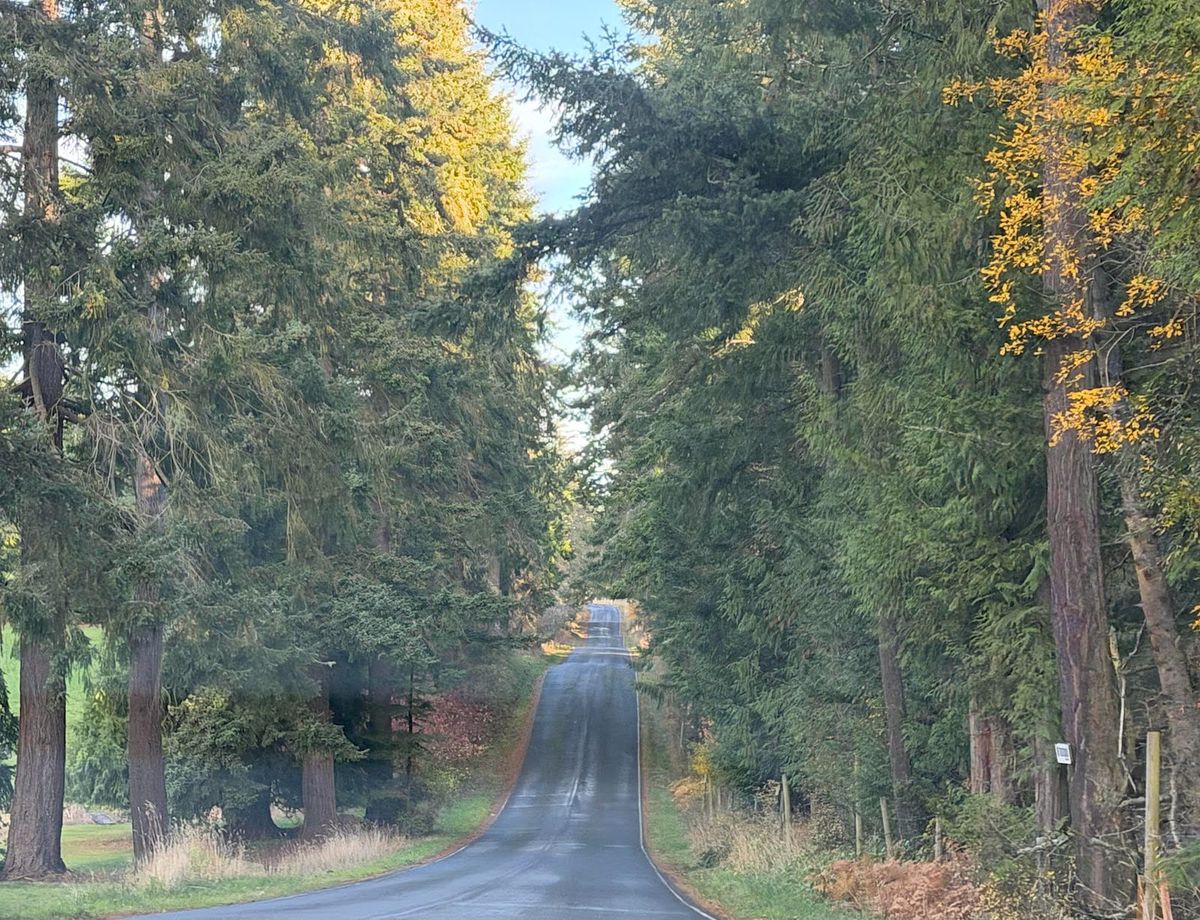
While intersection collisions are a major concern in metropolitan areas, Ley identifies vehicles leaving their lanes as a particularly serious problem on rural roads.
"Lane departure is the primary fatal crash type in rural areas," Ley explained.
Speed compounds the danger. At higher speeds, drivers have less opportunity to recover when a vehicle leaves its lane, and collisions can be more severe.
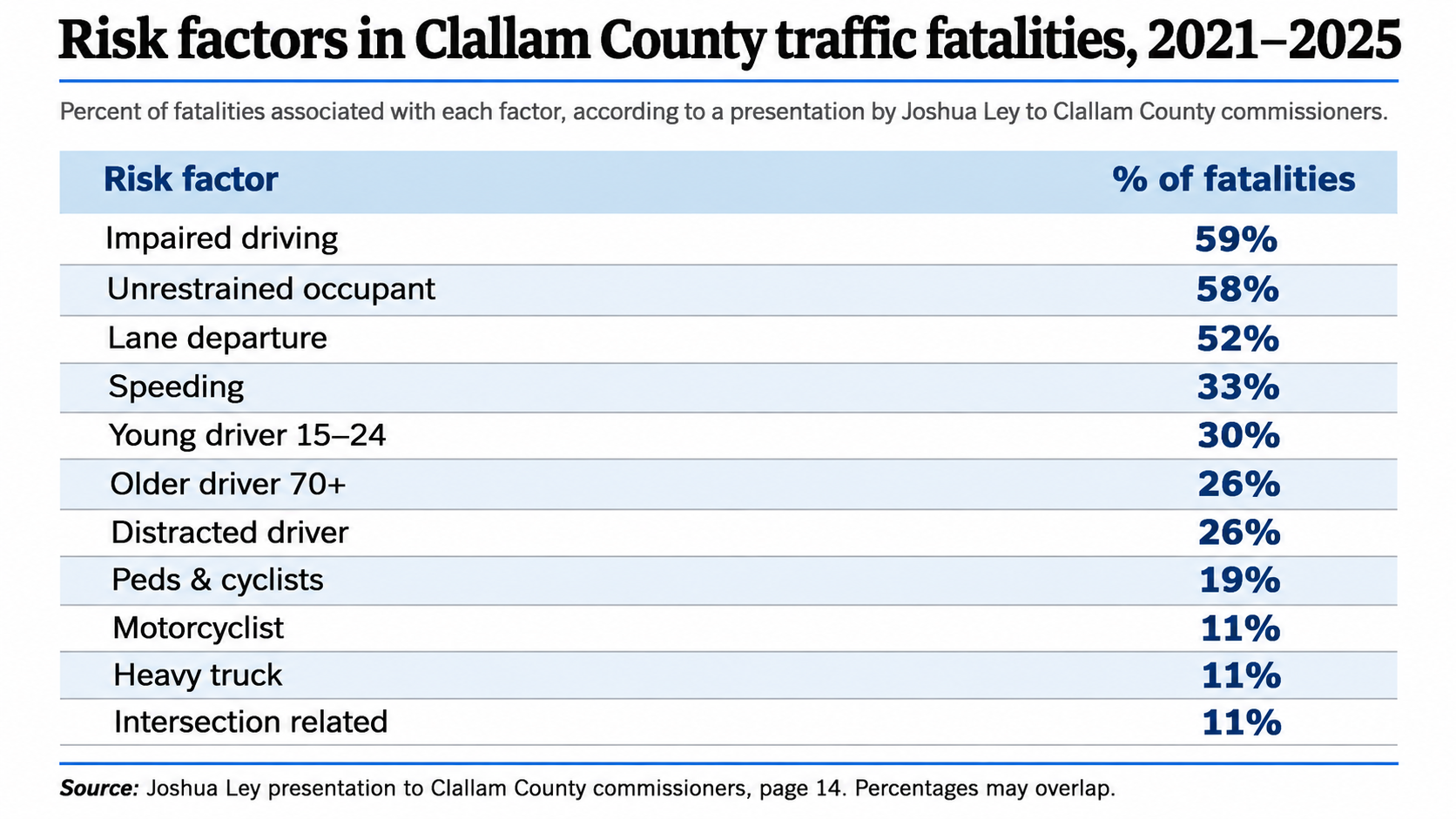
In his presentation, Ley identified impaired driving, failure to use restraints, lane departures and speeding among the leading risk factors associated with Clallam County traffic fatalities during 2021–2025. Impaired driving generally refers to driving under the influence of alcohol, drugs or medications that affect driving ability. Individual crashes may involve more than one factor.
To illustrate the problem locally, Ley reviewed five fatal crashes north of Highway 101 in the Sequim area between 2016 and 2025, all of which he personally reconstructed.
According to Ley, four involved combinations of excessive speed, impaired driving and vehicles leaving the roadway or failing to negotiate curves. The fifth involved a driver whose vision was affected by sunlight and who struck a cyclist while attempting to avoid a stopped vehicle.
The problem with identifying dangerous roads
Some intersections have established histories of traffic collisions. Ley identified Kitchen Dick Road at Old Olympic Highway and Old Olympic Highway at Cays Road/MacLeay Road among the area's known trouble spots.
But crash records don't necessarily tell the whole story.
"The scariest places to me include where Louella, Palo Alto, and Happy Valley join Hwy 101, but we have no fatal events at those immediate intersections," Ley said.
A December 2020 head-on collision near Happy Valley Road killed two people. After reviewing the original collision report and emergency response records, Ley confirmed that the crash involved a lane departure on Highway 101, not a traffic conflict at the intersection.
Ley said the absence of fatal crashes at those intersections does not necessarily reflect the risks drivers encounter.
"These Highway intersections are ripe for conflict, but have little real data," he said.
Ley said drivers' accounts of close calls could help document hazards not captured in collision reports. His regional Target Zero coalition is collecting that information through a near-miss survey. He also offered a possible explanation for the relatively few serious crashes, while emphasizing that it was speculation.
"I speculate that it's so risky, people exercise much more caution there, leading to few serious conflicts," he said.
Looking beyond crash reports
The Sequim Post previously reported that Clallam County recently secured a $209,000 federal Safe Streets and Roads for All planning grant to develop a road-safety action plan.
"We have lots of crash information, but no formal way to collect and archive near-miss data in terms of observed behaviors, facilities concerns, and problem locations," Ley explained.
That information could help identify locations where residents regularly encounter dangerous conditions even when serious crashes have not yet occurred. But roadway improvements also involve tradeoffs.
Ley noted that wider, straighter roads may appear safer because they provide more room for vehicles, pedestrians and cyclists. Yet those same features can encourage higher speeds. Narrower roads and traffic-calming measures may reduce speeds but also leave drivers less room to recover from mistakes.
"The art is balancing what risk is being mitigated versus what risks are expanded. There are trade-offs," Ley said.
What the numbers can—and cannot—tell us
The decade of crash data shows that county roads account for a disproportionately large share of Clallam County's fatal crashes compared with their share of all reported collisions.
But those percentages alone do not establish that county roads are more dangerous per mile traveled. Traffic volumes, road conditions, speeds and driving patterns all affect the likelihood and severity of collisions.
Ley says traffic-volume information is essential when evaluating a particular roadway. It can help distinguish locations with frequent crashes because large numbers of vehicles use them from locations with unusually high risks relative to traffic.
The county's new safety-planning effort is intended to bring together crash records, roadway conditions and community observations to identify where improvements could make the greatest difference.
For Sequim-area drivers, the findings illustrate the challenge: serious crashes can occur away from familiar trouble spots, while intersections that raise safety concerns may have few recorded fatal collisions.
Improving roadway safety may require looking beyond where serious crashes have already occurred to identify risks that have not yet been reflected in the statistics.⬥